Why This Matters
Vaping has become one of the clearest emerging welfare issues in Australian schools. Recent AIHW reporting shows that almost 30 per cent of secondary students had used an e-cigarette by 2022-23, around 16 per cent had used one in the past month, and disposables accounted for roughly 80 per cent of current use.
Those numbers matter because they shift the problem from isolated experimentation to something schools may need to manage repeatedly across year levels and campus locations. At the same time, many of the places where vaping concerns arise, such as toilets and change areas, are precisely the spaces where cameras are not appropriate.
That leaves school leaders and wellbeing teams with a difficult balance: they need earlier, more reliable awareness of recurring behaviour, but they also need to respect student privacy and keep the response grounded in safeguarding and welfare rather than punitive surveillance. Without better information, schools often end up depending on student reports, sporadic staff presence or the moment a problem becomes visible enough to trigger a complaint.
Education providers also need to balance openness, safeguarding and community confidence in a way that few other sectors do. Security has to support a welcoming environment for students and families while still giving leaders enough evidence and operational control to respond quickly when concerns arise across larger or more complex estates.
How Connect Services Would Respond
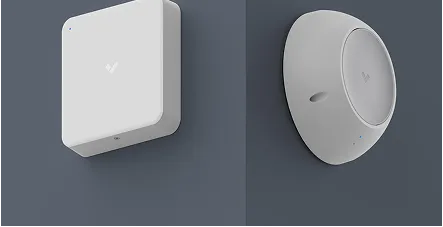
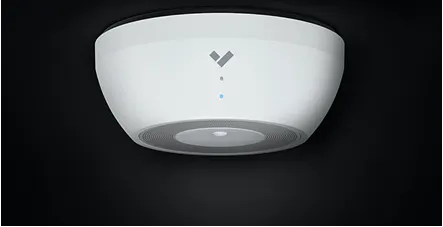
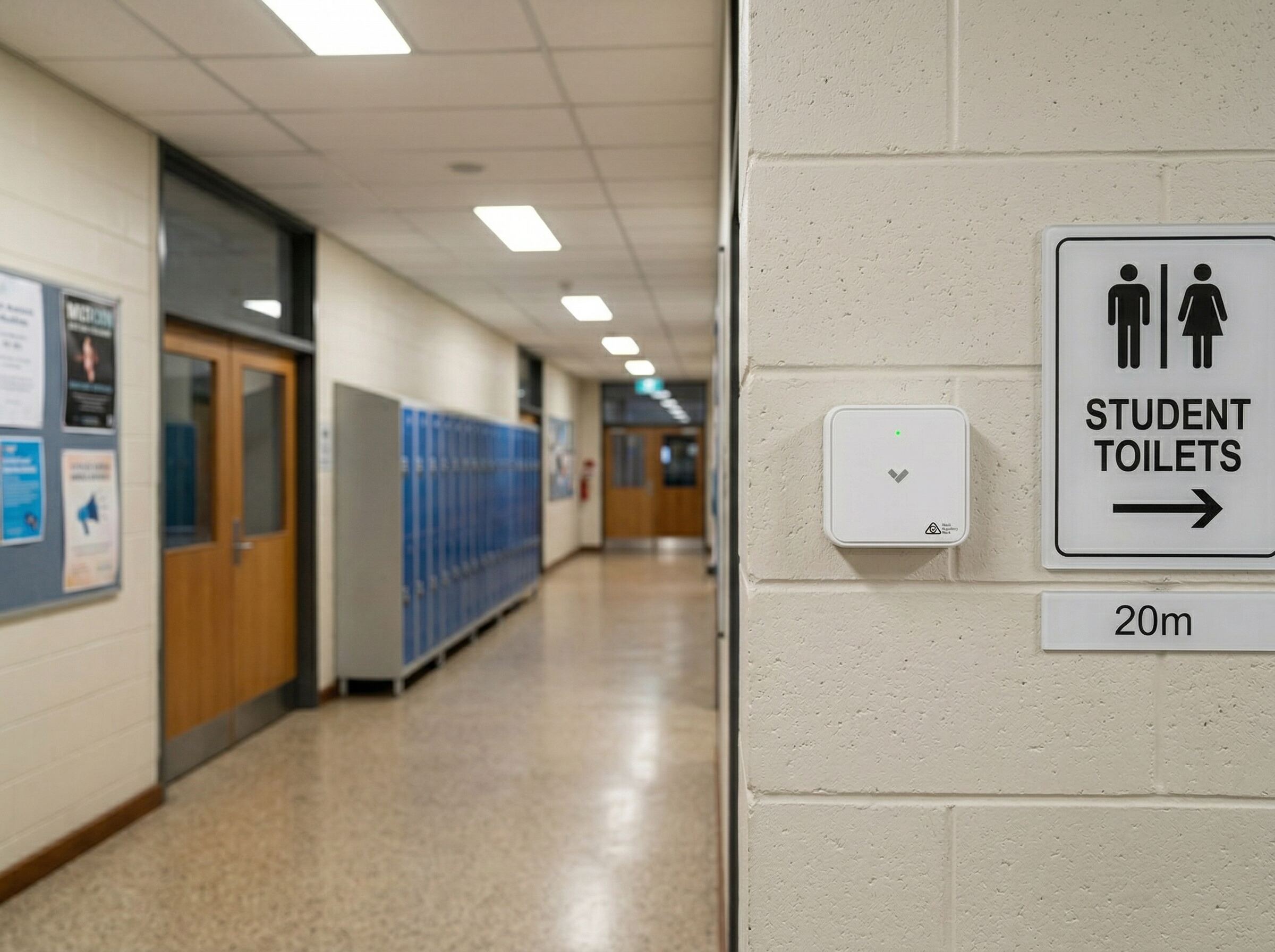
That is why Connect Services would typically recommend vape-detection sensors as part of a wider approach to education security and student wellbeing. The role of the sensor is not to identify individual students on its own and it is not a replacement for pastoral judgment.
It is to alert authorised staff when vaping indicators are detected in a sensitive area so they can respond earlier, check the location and decide on an appropriate welfare-led intervention. Because the platform can also show time patterns and repeat locations, leaders gain a clearer sense of whether a problem is occasional, concentrated around one space or increasing at particular times of day.
That gives schools a more useful basis for allocating supervision, engaging families or adjusting wellbeing responses. Where the broader campus already uses connected security tools, the same cloud-managed environment can keep these alerts visible to the right staff without forcing another isolated workflow onto a busy leadership team.
A staged cloud-managed model helps because campuses and buildings can be brought into one operating standard over time instead of waiting for a single major project. That makes it easier to keep governance improving even when older sites, newer facilities and shared community spaces all sit within the same education portfolio.
What This Could Improve
The benefit is earlier awareness with a more privacy-conscious operating model. Schools can respond based on evidence of a likely event rather than suspicion alone, and they can do so in a way that is better aligned to sensitive student spaces than video would be.
The system would not guarantee vaping disappears, and the public copy should not promise a behavioural outcome that depends on broader school culture, supervision and wellbeing support. What it can reasonably claim is faster detection of likely incidents, better visibility into recurring hotspots and more informed decision-making about how resources should be deployed.
That can also reduce the sense of uncertainty that school leaders often face when they know a problem exists but do not have enough reliable information to decide whether it is isolated or widespread. In practice, that makes the technology most defensible when it is positioned as a student-welfare tool first and a disciplinary input second.
The real gain is steadier administration and calmer decision-making. When leaders know incidents can be reviewed, restricted areas can be managed and supporting records can be retrieved consistently, the security conversation becomes less reactive and better aligned to safeguarding, wellbeing and facilities management responsibilities already sitting inside the school or provider.
Next Step
If your school is trying to respond to vaping without compromising privacy or overburdening staff, the next step is usually to define who should receive alerts, how follow-up should work and which locations need a more reliable early-warning signal. Connect Services would help shape that workflow before recommending device placement.
That is why education rollouts usually benefit from beginning with the campuses or spaces where inconsistency creates the most friction today, then using that first phase to define the operating standard for the rest of the estate. It keeps the work proportionate and avoids imposing unnecessary controls on parts of the environment that do not need them.
Just as importantly, it helps leaders explain to staff and families why the security model is improving without making the campus feel over-managed. It also gives leaders more room to align security changes with wellbeing messaging and community expectations.
For schools wanting a more measured, evidence-based response to vaping concerns, review the vape-detection approach and then contact Connect Services to discuss a welfare-led deployment for sensitive education settings.