Why This Matters
Councils manage some of the most diverse property portfolios in the public sector. A single local government may be responsible for libraries, depots, aquatic centres, sports pavilions, community halls, customer-service centres, waste facilities and administration buildings, all with different opening hours, user groups and risk profiles.
Jobs and Skills Australia data shows public administration and safety employs about 991,400 people nationally, including around 154,100 in local government administration alone, while Safe Work Australia continues to show a relatively high serious-claim burden in the broader sector. The operational challenge is rarely a lack of buildings.
It is the lack of consistency. One site may have serviceable cameras, another only an alarm, another still nothing more than keys and local knowledge.
When incidents occur, councils can find themselves juggling different vendors, different retrieval processes and different standards of evidence from one facility to the next. That fragmentation makes it harder to manage risk centrally and harder to show elected members or executives that security investment is being applied in a disciplined, scalable way.
Public-sector operators also carry a visibility and accountability burden that commercial sites do not always face in the same way. When a building, depot or remote asset is poorly monitored, the cost is not only operational.
It can affect service continuity, staff confidence, public trust and the quality of reporting available to executives, boards or elected representatives.
How Connect Services Would Respond
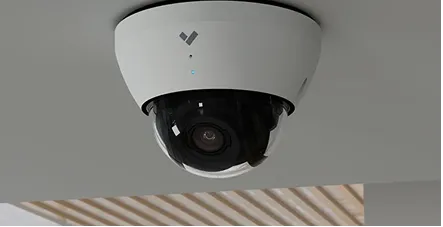
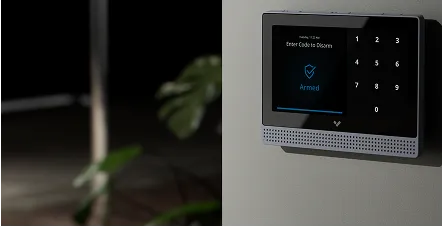
Connect Services would usually approach that problem with a staged model built around cloud-managed security cameras, access control and operating practices aligned to government and infrastructure environments. Instead of trying to replace every site at once, councils can prioritise the facilities with the highest combination of public exposure, asset value, after-hours risk or maintenance burden, then bring additional buildings into the same platform over time.
That creates one administrative environment for authorised users to review incidents, manage permissions and compare risk across the estate even while individual sites are still at different stages of uplift. The same model also supports mixed facility types more cleanly because a library, depot and community hall can all sit within one operating framework while still having different local rules and opening profiles.
For local government teams balancing limited capital and operational resources, staged standardisation is often more realistic than a one-time replacement promise. That is why a staged, cloud-managed model is so useful across government and infrastructure estates.
Different asset types can still have different local rules, but they can be brought under a clearer common standard for visibility, access and incident review instead of remaining locked into separate site-by-site decisions that are difficult to govern centrally.
What This Could Improve
The value of that approach is governance and repeatability. Councils can develop a clearer baseline for camera coverage, access control, evidence retention and escalation without reinventing the process at each new site.
Facility managers spend less time on ad hoc troubleshooting. Corporate teams gain a more reliable view of where incidents are concentrated and where the estate still depends on manual workarounds.
It also helps with future budgeting because security upgrades can be prioritised against a known standard rather than through isolated asset requests that are hard to compare. The public copy should stay grounded here.
A staged rollout does not solve every facilities challenge or eliminate public risk. What it does offer is a more practical way to bring a diverse property portfolio under clearer oversight, which is often exactly what councils need when buildings, budgets and user groups are all pulling in different directions.
In practice that creates better auditability and a calmer operational picture. Corporate teams can see where the estate is still dependent on manual workarounds, site teams get faster support when incidents occur and leadership has a stronger basis for deciding which risks are genuinely strategic rather than simply more visible because one site reports better than another.
Next Step
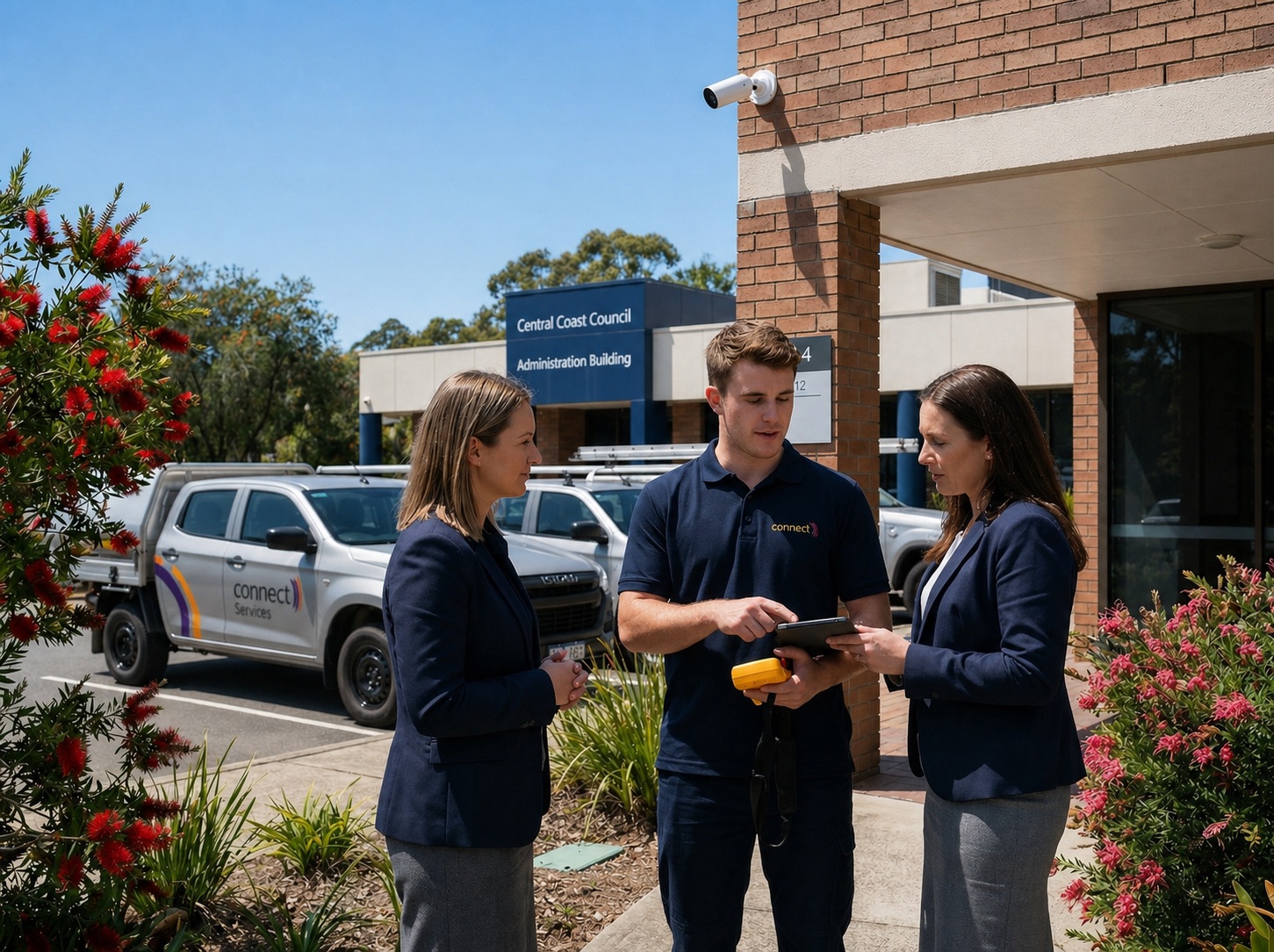
If your council is trying to move from fragmented site-by-site security toward a more scalable estate-wide model, the first step is usually to identify which facilities most need consistency in access, incident review and after-hours visibility. Connect Services would use that priority view to shape a staged roadmap rather than forcing every building into the same timeframe.
The most defensible starting point is usually the facilities or assets where poor visibility currently drives avoidable callouts, manual administration or weak incident evidence. Once those priorities are clear, the rollout can be phased in a way that respects public budgets and governance expectations while still lifting the estate standard over time.
That phased logic also makes it easier to explain priorities to executives, boards or elected members because the security roadmap is tied to service continuity, staff safety and evidence quality rather than to isolated technology requests. It also makes future asset onboarding easier to justify and govern because each new site can be assessed against the same risk and reporting logic.
For local governments reviewing libraries, depots, halls or civic facilities, start with the sector context and then contact Connect Services to discuss a council rollout that improves oversight while respecting real-world budget and estate constraints.