Why This Matters
Critical infrastructure security has changed significantly in recent years. Australia’s Security of Critical Infrastructure framework now spans 11 sectors, and the risk-management obligations introduced under the amended regime pushed responsible entities to think more formally about hazards across physical security, personnel, cyber, supply chain and natural events.
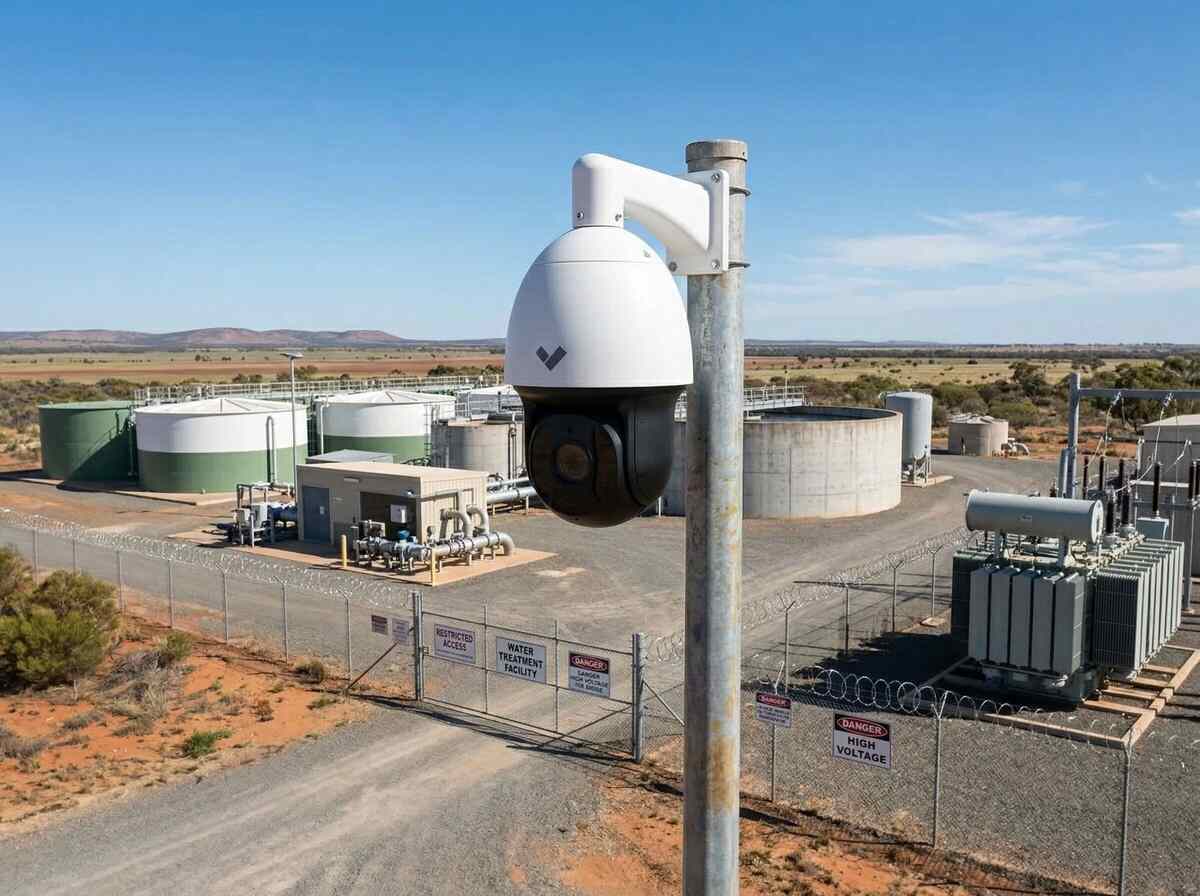
For utilities and public operators, that matters because the asset base is rarely concentrated in one place. It may include treatment plants, pump stations, substations, depots, reservoirs, remote compounds and public-facing facilities, each with different staffing levels and different exposure to trespass, vandalism or service disruption.
A local-only security model struggles in that environment because incidents often begin at the edge of the estate, not at the most staffed site. If remote assets are difficult to see, difficult to verify and difficult to support after hours, the operator ends up spending heavily on travel, guard attendance or fragmented local systems that never create a coherent picture of risk across the network.
Public-sector operators also carry a visibility and accountability burden that commercial sites do not always face in the same way. When a building, depot or remote asset is poorly monitored, the cost is not only operational.
It can affect service continuity, staff confidence, public trust and the quality of reporting available to executives, boards or elected representatives.
How Connect Services Would Respond
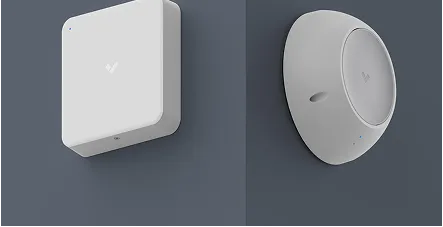
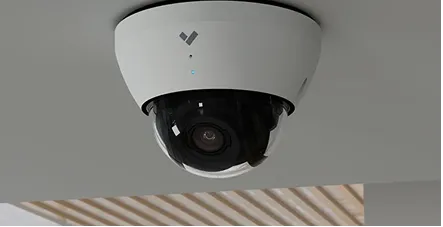
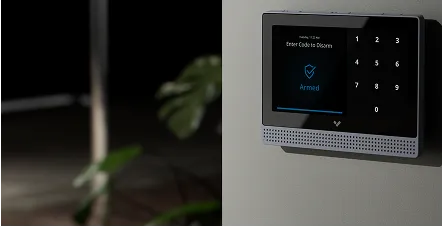
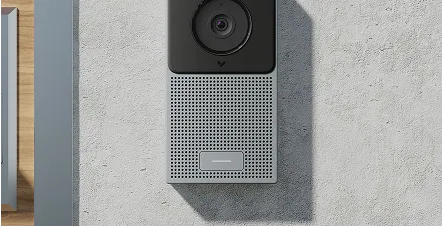
Connect Services would typically respond with a blend of solar security cameras, alarm monitoring and the wider cloud-managed platform approach, all aligned to the realities of government and critical infrastructure environments. The design would differentiate between major staffed facilities and dispersed remote assets, using fixed infrastructure where it makes sense and rapid-deploy or solar-powered coverage where trenching, permanent power or local comms would otherwise delay visibility.
Authorised operators could review live status, retrieve footage, verify alarms and maintain clearer records across the estate from one environment rather than switching between isolated site systems. Connect Services would keep the framing disciplined: this kind of platform can support the physical-security component of broader risk-management obligations, but it should never be written as if cameras and alarms alone satisfy the full SOCI regime or replace wider governance, cyber and resilience controls.
That is why a staged, cloud-managed model is so useful across government and infrastructure estates. Different asset types can still have different local rules, but they can be brought under a clearer common standard for visibility, access and incident review instead of remaining locked into separate site-by-site decisions that are difficult to govern centrally.
What This Could Improve
The practical benefit is faster verification and more scalable oversight. Remote assets no longer sit outside the operator’s main line of sight just because they are too expensive to monitor conventionally.
Incident review becomes easier because footage and alarm context are accessible without a site visit, and operations teams can focus their time on genuine issues rather than travelling to every ambiguous after-hours alert. The platform can also help standardise how physical-security events are documented and escalated across a network, which is valuable when critical-infrastructure operators need a more defensible audit trail around asset protection.
None of that guarantees immunity from disruption or regulatory satisfaction. Those outcomes depend on the wider operating framework.
What it does offer is a clearer physical-security layer that is easier to scale across both flagship facilities and isolated sites, which is often where traditional approaches become least efficient and least consistent. In practice that creates better auditability and a calmer operational picture.
Corporate teams can see where the estate is still dependent on manual workarounds, site teams get faster support when incidents occur and leadership has a stronger basis for deciding which risks are genuinely strategic rather than simply more visible because one site reports better than another.
Next Step
If your organisation is reassessing how critical assets are monitored across both major facilities and remote sites, the useful first step is usually to identify where visibility is weakest and where site attendance is still being used to compensate for poor information. Connect Services would then recommend a staged physical-security design that fits the estate you actually operate.
The most defensible starting point is usually the facilities or assets where poor visibility currently drives avoidable callouts, manual administration or weak incident evidence. Once those priorities are clear, the rollout can be phased in a way that respects public budgets and governance expectations while still lifting the estate standard over time.
That phased logic also makes it easier to explain priorities to executives, boards or elected members because the security roadmap is tied to service continuity, staff safety and evidence quality rather than to isolated technology requests. It also makes future asset onboarding easier to justify and govern because each new site can be assessed against the same risk and reporting logic.
For utilities and public operators reviewing remote asset protection, explore the solar surveillance options and then contact Connect Services to discuss a rollout that strengthens remote visibility without overstating what the technology can claim in a regulated infrastructure setting.