Why This Matters
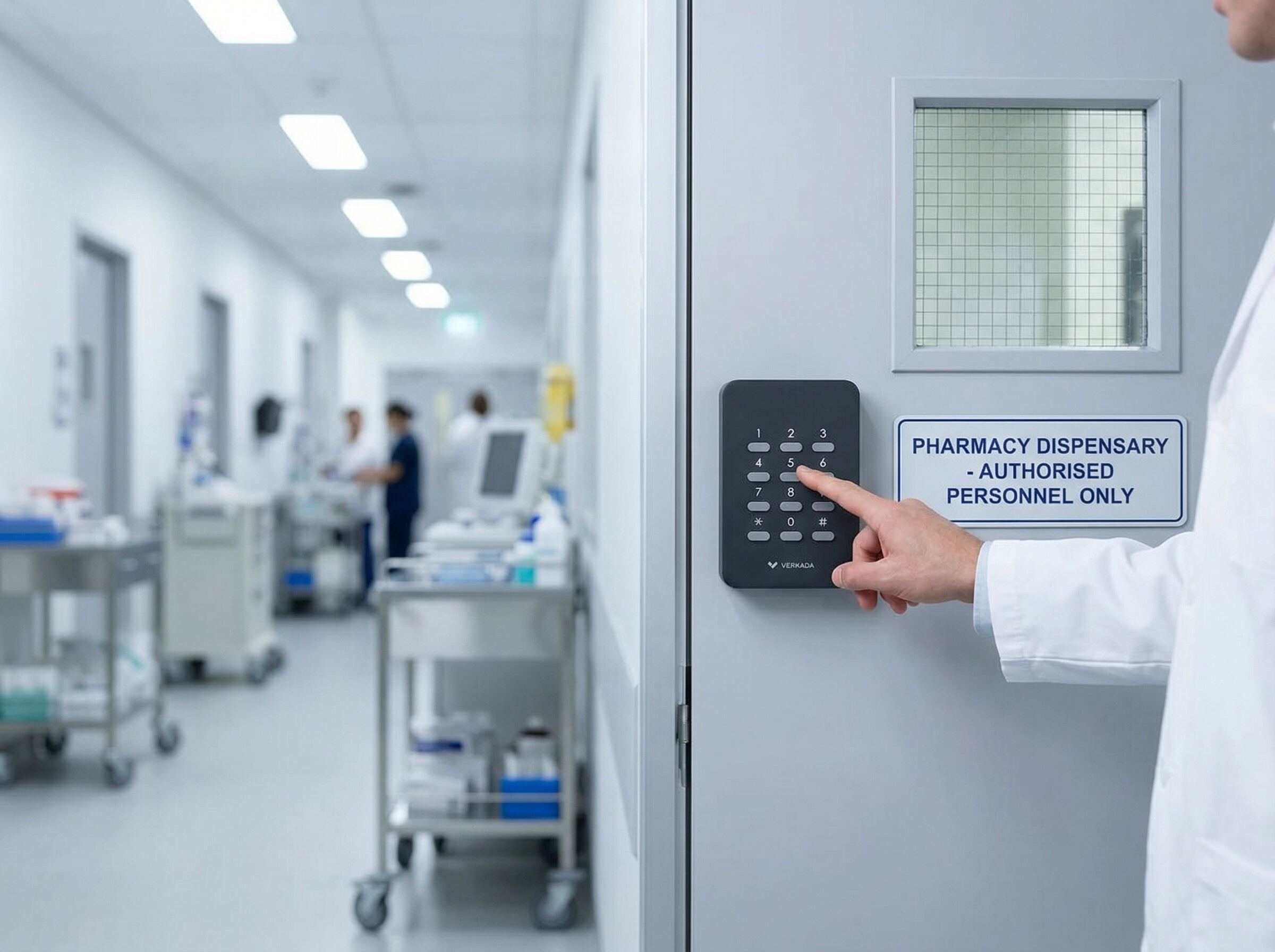
Medication security is one of the clearest examples of why generic site security rarely goes far enough in healthcare. Hospital pharmacies, medication rooms and controlled-drug storage areas sit inside environments that are already busy, time-critical and highly regulated, yet the consequences of poor access control are unusually serious.
NSW Health guidance on medication handling, Schedule 8 medicines and Schedule 4 Appendix D drugs makes it clear that storage, access and record keeping need to be tightly controlled. In practical terms, though, many providers still manage these spaces with a patchwork of keys, PIN codes, local camera views and manual escalation when discrepancies or after-hours access questions arise.
That can leave too much ambiguity around who entered, when they entered and what supporting evidence is available if an audit, discrepancy review or internal investigation is triggered. In medication-sensitive areas, ambiguity is the enemy.
The organisation needs to know that access was deliberate, attributable and reviewable, especially when multiple authorised staff, contractors and shift changes intersect across a 24-hour facility. Healthcare providers also have to manage these risks in settings where care delivery, public access and restricted clinical activity are happening side by side.
That is one reason the evidence burden feels so high: incidents often involve several teams at once, and the quality of the response depends heavily on how quickly the organisation can build a clear, credible timeline.
How Connect Services Would Respond
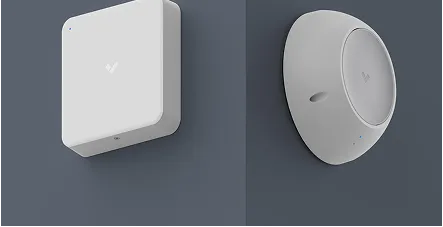
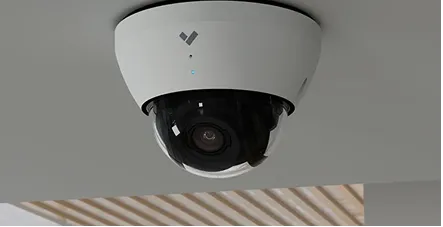
Connect Services would usually address that through cloud-managed access control, linked security cameras and broader planning suited to healthcare facilities. The design would focus on pharmacy entries, medication rooms, restricted storage areas and any adjoining corridors or service points where access should create a reliable record every time.
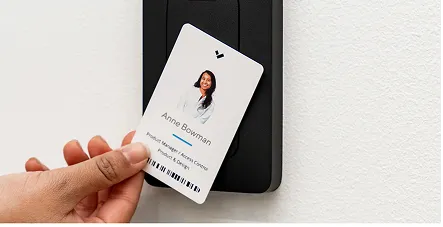
Instead of depending on shared knowledge of keys or codes, permissions can be issued to named users, aligned to role and adjusted quickly when staffing changes. Linked camera views and access events then give authorised reviewers a clearer timeline if there is a discrepancy, an after-hours access question or a need to demonstrate that controls were followed.
Connect Services would keep the public framing disciplined: the platform would support medication-security governance and investigation workflows, but it would not be positioned as a replacement for drug registers, two-person checks, pharmacy procedures or formal medicines governance obligations. A cloud-managed operating model is helpful here because it can improve visibility without forcing hospitals, pharmacies or aged care providers into another disconnected workflow.
The strongest deployments are the ones that complement clinical, facilities and governance processes already in place so staff can respond faster without feeling that technology has been bolted awkwardly onto care environments.
What This Could Improve
That distinction is what makes the proposition credible. Better access attribution can reduce the uncertainty that surrounds many pharmacy-security questions.
Teams can review who entered the area, when they entered and whether the event aligns with roster, task or protocol. Audit preparation becomes cleaner because access records and supporting footage are easier to retrieve.
Investigations are stronger because the evidence is not limited to a local key register or a vague recollection of who was on duty. None of this guarantees discrepancies vanish or that the organisation no longer needs rigorous medication processes.
What it does offer is a more defensible security layer around those processes. For healthcare providers, that can be especially valuable in multi-department environments where medication governance is already under close scrutiny and leadership wants greater confidence in how controlled areas are managed after hours and across shift changes.
That usually leads to stronger escalation and cleaner governance conversations. Leadership can compare sites or departments more confidently, reviewers spend less time chasing records and operational teams can focus on what needs to change rather than debating what the evidence does or does not show after the fact.
Next Step
If your organisation is reviewing pharmacy or controlled-substance security, the first question is usually where uncertainty still exists in the access trail and how quickly evidence can be retrieved when a discrepancy is raised. Connect Services would design the access and camera layer around those points of friction so the rollout supports real governance and audit workflows.
Healthcare projects therefore tend to benefit from starting with the areas where the need for control, evidence and response is already most obvious, then expanding once the operating model is proven. That approach keeps the rollout aligned to real care and governance priorities instead of treating every room or facility as if it needed the same controls.
It also gives executives, clinical leaders and facilities teams a clearer shared basis for deciding where the next phase should focus without adding avoidable governance friction. That makes later phases easier to justify clinically and operationally across the estate.
For hospitals and healthcare providers looking for stronger controlled-area oversight, review the access-control platform and then contact Connect Services to discuss a medication-area deployment that improves attribution and review without overstating what technology alone can do.