Why This Matters
Industrial sites generate safety-critical moments every day: forklift interactions, dock movements, plant-room access, contractor tasks, confined operational spaces and handoffs between teams working different shifts. Recent Safe Work Australia figures still place manufacturing above the all-industry average for serious claims, which reinforces how important clean evidence is when a near miss or incident needs review.
The challenge is that many facilities have safety information everywhere and nowhere at once. A supervisor may have a statement, a maintenance team may have a work order, a loader may have a recollection, and a local camera may have footage that takes hours to retrieve.
That fragmented picture slows investigations and makes it harder to identify whether the issue was a one-off lapse, a layout problem, a traffic-management weakness or a recurring procedural gap. It also adds work to compliance preparation because the team spends more time gathering records than learning from them.
In a busy industrial environment, the problem is often not commitment to safety. It is the speed and quality of the operational evidence available once something has happened.
Industrial businesses also have to manage the overlap between production continuity, contractor access, vehicle movement and audit expectations. When those pressures sit inside the same physical footprint, poor visibility or weak attribution creates operational drag well beyond the immediate security issue because maintenance, HSE and site leadership all end up spending time on reconstruction instead of prevention.
How Connect Services Would Respond
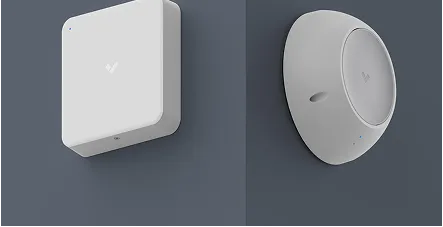
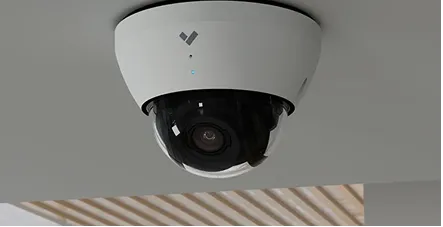
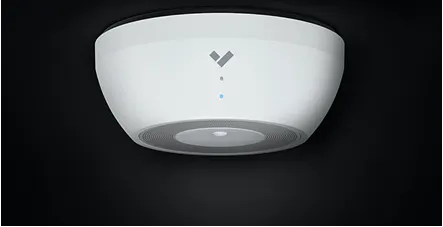
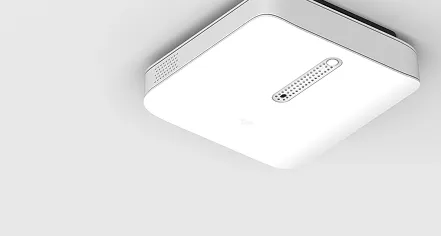
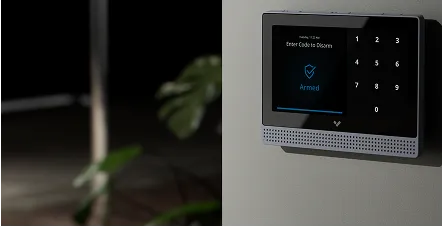
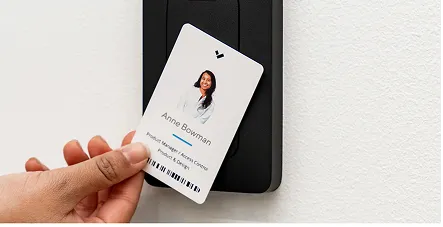
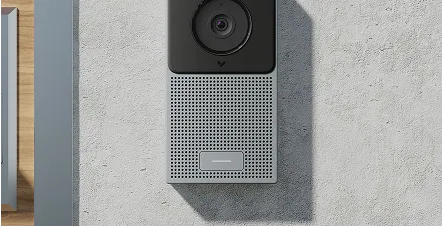
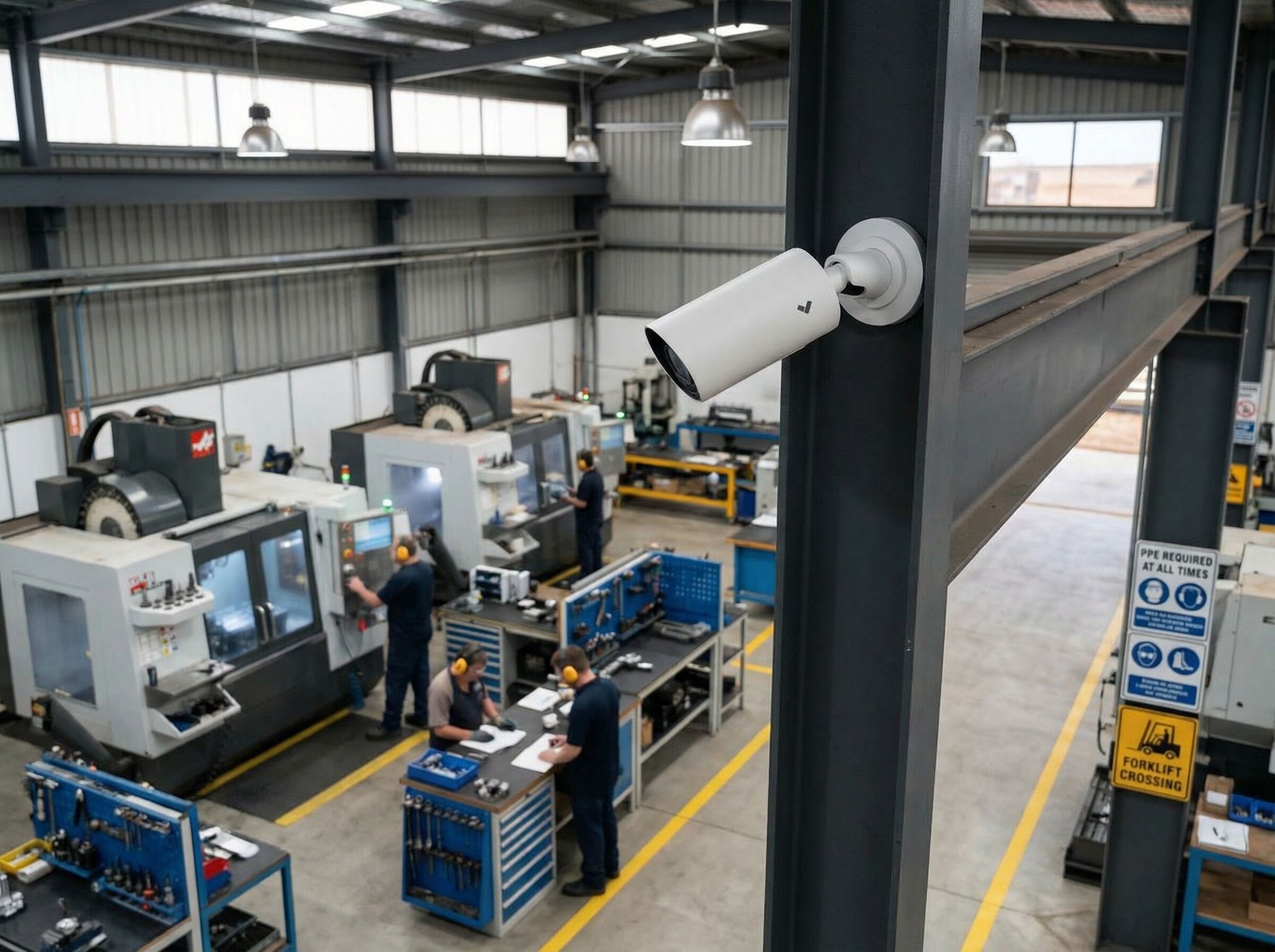
Connect Services would normally respond with a design built around cloud-managed security cameras, a broader single-platform view of cameras, alerts and access events and, where useful, targeted restrictions through access control for high-risk areas. In an industrial and manufacturing setting, that could include loading docks, dispatch areas, high-value process rooms, external movement routes, plant interfaces and other zones where visual evidence and reliable timestamps make reviews stronger.
The goal would not be to replace existing WHS systems, inductions, lockout processes or site supervision. It would be to give operations, HSE and site leadership a faster way to understand what actually happened, who was involved and whether the event points to a broader risk pattern.
When footage, device health and selected access data are available from the same environment, internal review becomes less dependent on manual file collection and more useful as a decision-making tool. That is why a single cloud-managed environment can be so useful across industrial estates.
Workshops, dispatch zones, yards, plant rooms and restricted stores may all operate differently, but they still benefit from a consistent approach to visibility, permissions and event review so the site is easier to manage as one system rather than a series of exceptions.
What This Could Improve
That usually improves three things at once. First, incident review becomes faster because the team is not wasting time locating or exporting files from disconnected systems.
Second, evidence quality improves, which makes it easier to brief leadership, insurers or investigators when required. Third, the business can use real events and near misses more effectively in training and continuous improvement because the record is clearer and easier to share responsibly.
None of that should be confused with compliance by technology alone, and the public copy needs to stay honest about that. Cameras do not replace competent supervision or safe systems of work.
What they do provide is a better operational record around moments that matter, which helps industrial businesses move from anecdote to evidence when refining traffic plans, contractor controls, exclusion zones or loading practices. Over time that creates a more disciplined safety conversation because review is based on observable site activity rather than reconstruction from memory alone.
The effect is usually strongest when the platform helps different teams work from the same evidence. Operations can see what happened, HSE can assess whether controls failed, maintenance can judge whether a physical fix is needed and leadership can decide where investment should go next without piecing the story together from several disconnected records.
Next Step
If you are trying to improve how industrial incidents, near misses or restricted-area events are reviewed, the best starting point is usually to identify which parts of the process currently rely too heavily on recollection or manual evidence gathering. Connect Services would then shape the camera and access layer around that review workflow so the deployment serves operations and HSE together.
Industrial projects therefore tend to perform best when they start with the highest-value or highest-uncertainty zones, then expand once the review and escalation workflow is working reliably. That approach keeps the rollout commercially grounded and helps the site build better discipline around evidence and control at the same time.
It also makes budget and shutdown planning easier because upgrades can be phased around operational priorities instead of imposed as one disruptive capital event. That phasing also leaves room to validate reporting expectations before scale.
For warehouses, plants and dispatch environments looking for stronger incident visibility, review the platform approach and then contact Connect Services to discuss a safety-monitoring rollout that improves evidence quality without overstating what the technology should replace.