Why This Matters
Industrial and warehouse environments sit at the intersection of security, safety and logistics. Recent Jobs and Skills Australia data shows manufacturing employs about 869,100 people nationally, while Safe Work Australia reports 13,800 serious claims for the industry in 2022-23 and a claim frequency that remains above the all-industry rate.
For operators running warehouses, production plants, dispatch yards or mixed-use industrial estates, that matters because perimeter control is rarely just about theft. The same gates and doors that protect stock also shape how contractors enter site, how vehicles move after hours and how restricted areas are separated from day-to-day circulation.
Many facilities still rely on a loose combination of padlocks, shared gate remotes, standalone alarms and camera systems that do not talk to each other. When something goes wrong, management can usually see part of the story but not the whole sequence.
A truck is on site after hours, a side gate has been opened, or stock has gone missing, yet there is no clean link between access event, footage and authorised movement. That uncertainty adds administrative cost as well as security risk, especially where industrial operations run across long hours, shift work or large external yards.
Industrial businesses also have to manage the overlap between production continuity, contractor access, vehicle movement and audit expectations. When those pressures sit inside the same physical footprint, poor visibility or weak attribution creates operational drag well beyond the immediate security issue because maintenance, HSE and site leadership all end up spending time on reconstruction instead of prevention.
How Connect Services Would Respond
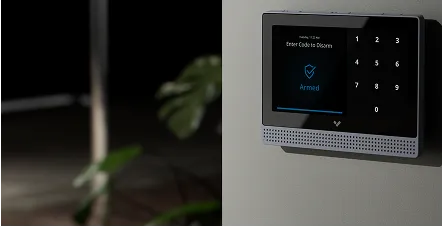
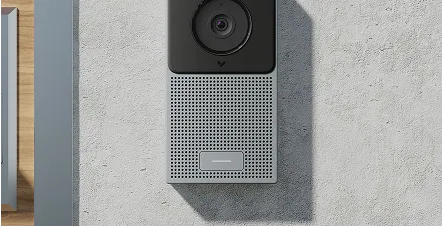
Connect Services would usually approach that challenge with cloud-managed access control, supported by security cameras and, where perimeter escalation is important, linked alarm workflows suited to industrial and manufacturing sites. The design would focus on the places that create the most operational exposure: entry gates, roller doors, dispatch zones, external yards, stock cages, plant rooms and other restricted spaces where access should be deliberate and attributable.
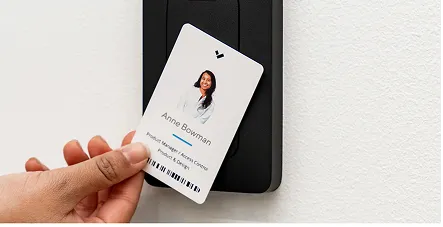
Permissions can be issued by role, contractor package, time window or delivery type rather than through shared remotes or keypad codes, while camera views and alarm events give managers a more complete incident timeline when after-hours activity needs review. Because the platform is centrally managed, the same site can support local supervision day to day while giving operations or security leaders a remote view when incidents, contractor issues or out-of-hours investigations require escalation.
That is why a single cloud-managed environment can be so useful across industrial estates. Workshops, dispatch zones, yards, plant rooms and restricted stores may all operate differently, but they still benefit from a consistent approach to visibility, permissions and event review so the site is easier to manage as one system rather than a series of exceptions.
What This Could Improve
The outcome is tighter control with less ambiguity. Yard and building entry becomes easier to audit.
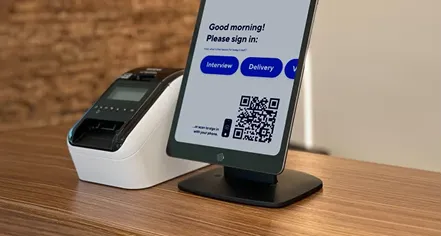
Contractors and delivery drivers can be managed with permissions that match the job instead of permanent workarounds. If an alarm or stock discrepancy occurs, the team can review the access event and related footage together rather than chasing separate systems.
That does not guarantee theft disappears or that every operational issue becomes a security incident, but it does make perimeter management more accountable and easier to investigate. It also supports broader site discipline because restricted areas stay restricted for a reason that can be documented and enforced consistently.
In industrial environments where the same facility may contain valuable inventory, vehicle movements, hazardous equipment and multiple third parties, that clarity is often more valuable than any headline statistic. It reduces friction when management needs to explain how the site was controlled and gives teams a better basis for deciding where extra physical controls or process changes are actually warranted.
The effect is usually strongest when the platform helps different teams work from the same evidence. Operations can see what happened, HSE can assess whether controls failed, maintenance can judge whether a physical fix is needed and leadership can decide where investment should go next without piecing the story together from several disconnected records.
Next Step
The right starting point is to map which entries and zones create the biggest combination of stock risk, contractor complexity and after-hours uncertainty. Connect Services would use that map to design a practical rollout that improves attribution and visibility without making the site harder to operate.
Industrial projects therefore tend to perform best when they start with the highest-value or highest-uncertainty zones, then expand once the review and escalation workflow is working reliably. That approach keeps the rollout commercially grounded and helps the site build better discipline around evidence and control at the same time.
It also makes budget and shutdown planning easier because upgrades can be phased around operational priorities instead of imposed as one disruptive capital event. That phasing also leaves room to validate reporting expectations before scale.
If you are reviewing gates, yards, roller doors or restricted spaces across a warehouse or plant, look at the access-control service options and then contact Connect Services to discuss a perimeter and access design that better fits industrial operating conditions.